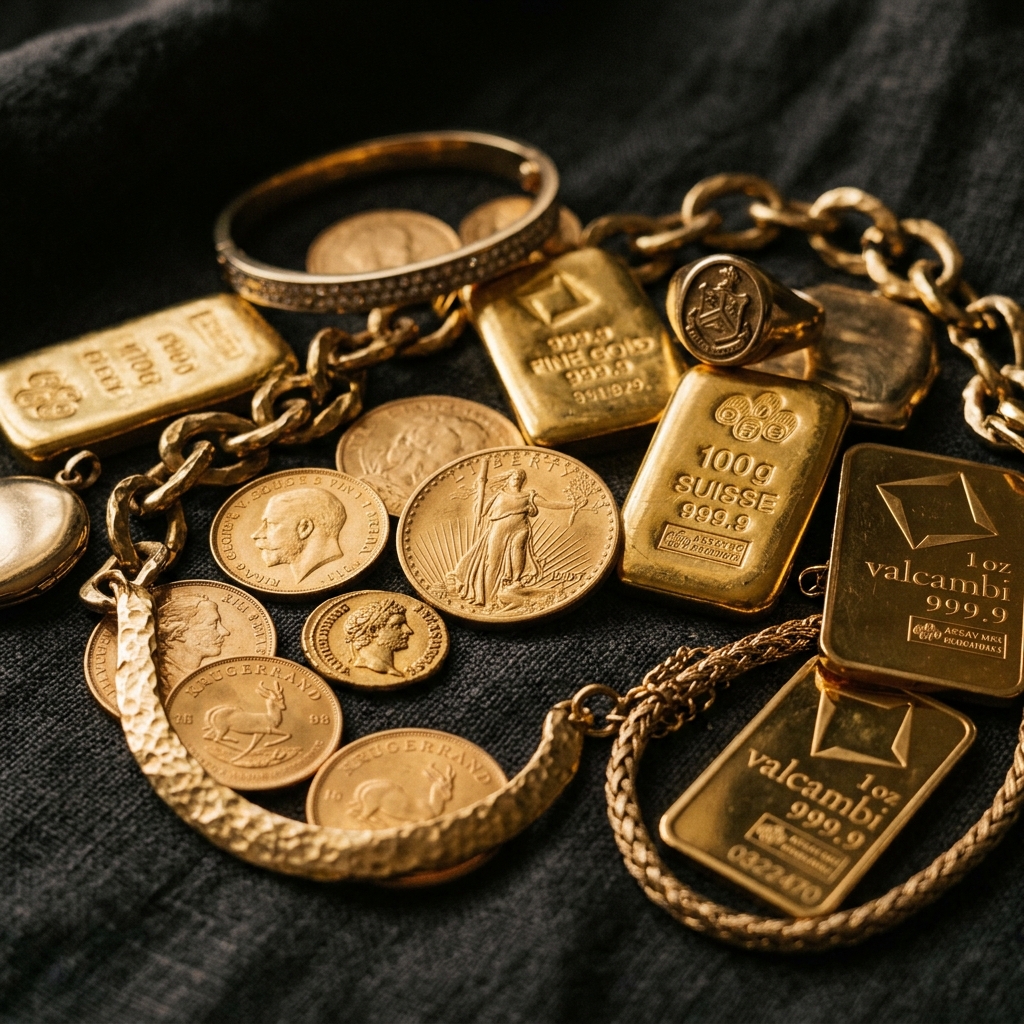
Selling your unwanted gold jewelry, old coins, or inherited estate pieces is a fantastic way to generate immediate cash. However, if you’ve never sold precious metals before, the process can feel intimidating. How do you know you're getting a fair price? What actually determines the value of your items?
At Coin Mart, we’ve been evaluating and buying gold in Chula Vista for over 65+ years. We believe in doing things right. Here is everything you need to know before you walk into a store to sell your gold.
1. Understand the Live Spot Price
The foundation of any gold payout is the "Spot Price." This is the live, globally traded market price for one troy ounce of pure (24-karat) gold. This price fluctuates continuously during market hours, much like a stock.
Any reputable gold buyer should use the real-time spot price to calculate your payout. If a buyer cannot or will not tell you what spot price they are basing their offer on, walk away.
2. Know Your Karats (Purity)
Jewelry is rarely made of 100% pure gold because pure gold is too soft. It is mixed (alloyed) with other metals like copper or silver for durability. The karat system measures this purity:
- 24k: 100% Gold (Typically coins or bullion)
- 18k: 75.0% Gold (Premium fine jewelry)
- 14k: 58.3% Gold (Standard US jewelry)
- 10k: 41.7% Gold (More durable, often used in rings)
When you sell gold, you are only paid for the actual gold content. For example, if you have a 14k gold chain, you are only being paid for the 58.3% of its weight that is pure gold.
3. The Evaluation Process
A trustworthy jeweler will evaluate your items right in front of you. They should never take your items into a back room out of your sight. The process usually involves:
- Sorting: Separating the items by their karat stamps (10k, 14k, 18k).
- Testing: Using acids or an electronic tester to verify the purity, as stamps can sometimes be inaccurate.
- Weighing: Weighing the sorted groups on a highly calibrated, state-certified scale (usually measured in grams or pennyweights).
4. Condition Does Not Matter (Usually)
One of the biggest misconceptions is that broken jewelry is worth less. If you are selling items for their "melt value," a broken chain, a single earring missing its pair, or a scratched ring is worth exactly the same as a brand new piece of the exact same weight and karat.
The Exception: If the piece is a highly desirable vintage item, a designer piece (like Cartier or Tiffany), or contains valuable intact gemstones, a premier jeweler like Coin Mart may pay a premium above the melt value to resell the item intact.
Ready to Get an Evaluation?
At Coin Mart, our evaluations are always free, clear, and pressure-free. We explain our calculations step-by-step so you can make an informed decision.